The Art of Fashion Plates and Paperdolls
Paper dolls have existed as long as there have been paper and creative
people to apply images to it. In France in the mid-1700s, "pantins"
were all the rage in high society and royal courts. This jointed
jumping-jack figure, a cross between puppet and paper doll, was made to
satirize nobility.
Paper dolls as we know them first appeared in the latter half of the
18th century. A set of rare hand-painted figures dated late in the
1780s can be found in the Winterthur Museum of Winterthur, Delaware. It
shows coiffures and headdresses for sale at the shop of Denis-Antoine
on Rue St. Jacques, Paris. In 1791, a London advertisement proclaimed a
new invention called the "English Doll." It was a young female figure
with a wardrobe of underclothes, headdresses, corset and six complete
outfits. At about three shillings for a complete doll and
wardrobe--plus an envelope to store her in--dressmakers could afford to
own several sets and distribute these dolls among their favorite
customers. Dolls like these were also sold in Germany and France.
In 1810, the London firm of S. & J. Fuller & Company printed the first
commercially popular paper doll, Little Fanny, with a 15-page book that
included seven figures and five hats. Fanny's head & neck were
separate, and fitted into various outfits as the moral tale, The
History of Little Fanny: Exemplified in a Series of Figures, was
told. At five to eight shillings for each book, their primary audience
included wealthy families.
The success of Little Fanny was followed two years later in America,
when J. Belcher printed a paper doll with a similar moral tale, The
History and Adventures of Little Henry. Within ten years, boxed
sets of paper dolls were popular playthings for children in Europe and
America.
McLoughlin Brothers, founded in 1828, became the largest manufacturer
of paper dolls in the United States, making their dolls fairly easy to
find today. They printed their paper dolls from wood blocks engraved in
the same way as metal plates. Some of the most popular dolls, selling
for five and ten cents a set, were Dottie Dimple, Lottie Love and
Jenney June. The largest prodlicer of paper dolls and children's books,
McLoughlin Brothers was sold to Milton Bradley in 1920.
A smaller publishing company, Peter G. Thompson, published paper dolls
in the 1880s. Similar to the McLoughlin style, some of their titles
were Pansy Blossom, Jessie Jingle, Lillie Lane, Bessie Bright
and Nellie Bly, selling for eight to fifteen cents per set. Also
in the 1880s, Dennison Manufacturing Company added crepe paper to their
line, starting a trend that lasted for about forty years. Crepe paper
added dimension to the costumes of paper dolls and provided countless
hours of fun for children at home and in schools.
The first celebrity paper doll to be produced was a doll portraying the
renowned ballerina Marie Taglioni, published in the 1830s. In 1840, a
boxed set was done of another ballerina, Fanny Elssler, as well as of
Queen Victoria. From the 1870s to the 1890s, European manufacturers
produced beautifully lithographed full-color paper dolls. They often
represented royalty and famous theater personalities, including the
German Royal Family, the House of Windsor, and actresses Ellen Terry,
Lily Langtry and Lillian Russell. In the 1890s, Frederick A. Stokes and
Company published several sets of paper dolls including likenesses of
European royalty and America's own Martha Washington.
The 1900s saw an explosion of paper dolls in many lady's and children's
magazines. Lettie Lane, painted by Sheila Young, made her entrance in
Ladies' Home Journal in October 1908 and ran until July 1915.
The pages included Lettie, her friends, her family, their servants and
accompanying stories. The Lane family became well-known and loved all
across America. Ladies' Home Journal continued printing paper
dolls through 1948 by a variety of artists including Lucy Fitch Perkins
and Gertrude Kay.
The 1930s through the 1950s can perhaps claim the title "Golden Age of
Paper Dolls," as their popularity during those years has never been
equaled. During the Great Depression, paper toys could be afforded by
all. Despite the product shortages of World War 11, paper dolls were
still manufactured, though on lesser-quality papers. Parents of the
1950s revered the image of little girls lovingly playing with paper
dolls, just as their mothers and grandmothers had before them.
Fashion Plates and
Paperdolls
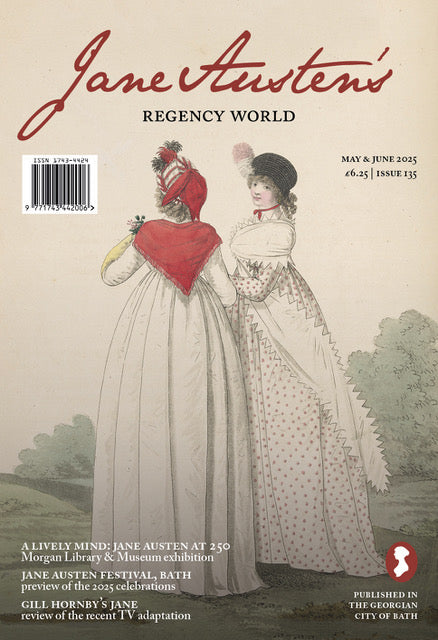
During the eighteenth and nineteenth centuries, the fashion
plate was one of the most important resources for “matters of style”.
Although this steel-engraved or lithographed print was originally
distributed alone or included as a supplement in periodicals, it has
come to be viewed as a form of decorative art on its own. Today, it
also serves as a valuable primary source for the study of historic
costume.
Two Parisian printsellers, Jacques Esnauts and Michel Rapilly, are
credited with the creation of colored prints depicting contemporary
fashion for men and women in 1788. Their plates appeared in the
publication La Galerie des Modes, along with portraits of French
court members and detailed images of theatrical costumes. In 1787,
La Galerie des Modes ceased production, and in 1794 Nicolaus
Wilhelm von Heidelhoff, a Paris-trained engraver, began production of
the Gallery of Fashion in London. His exquisitely hand-tinted
fashion plates were often metallic-embellished. By the turn of the
century, numerous French, English, and German periodicals also included
fashion plates.
Fashion prints also spawned creativity with scissors and bits of paper
and fabric. In Jane Austen in Style, a print is shown from Fanny
Austen Knight’s (Jane Austen's niece) pocket book of 1805. The caption
accompanying them tells how Fanny cut out the fashions on the page and
placed swatches of silk and muslin behind the engravings so that her
figures display not only the latest fashionable gowns, but also the
latest fabrics.
In America, women eagerly sought information on the latest Paris
fashions from monthly publications such as Godey’s Lady’s Book
and La Belle Assemblée. From the inception of Louis B. Godey’s
magazine in Philadelphia in 1830, until the late 1860s, Godey’s
Lady’s Book was considered an institution and a leading authority
on fashion. Initially focused on sentimental short stories from English
publications, it occasionally added reproduced French and English
fashion plates.
Sarah Josepha Hale, an untrained, penniless widow with five children,
was hired as editor of Godey’s Lady’s Book in 1837. A devout feminist
and activist, Mrs. Hale’s many accomplishments included helping to
organize Vassar, the first women’s college, and spurring the movement
to proclaim Thanksgiving as a national holiday. Her influence upon
Godey’s Lady’s Book was seen almost immediately, as she strove
to shape it into a work of American “miscellany which although devoted
to general literature” was “more expressly designed to mark the
progress of female improvement”. In her column, Editor’s Table,
she spear-headed women’s causes and spoke out against social injustice.
Mrs. Hale hired local artists to redraw fashions from European
publications, although the designs were actually simplified
Philadelphia or New York variations, as few American women could afford
French gowns until the late 1860s. Godey’s hand-colored plates
included vague descriptions of fabrics, and the painted colors
sometimes differed from those described in the text.
In November 1859, Godey's Lady's Book was the first magazine to
print a paper doll in black and white followed by a page of costumes
for children to color. This was the only paper doll Godey's ever
published, but it set the trend that many women's magazines followed in
years to come.
Interest in Godey’s Lady’s Book began to wane after the Civil
War when industrialization brought an increase in urbanization and
disposable income. Fashionable women began to seek the more
sophisticated look presented in other periodicals, such as Graham’s and
Peterson’s. In 1877, Godey sold his publication, and, despite new
owners and relocation to New York, the magazine failed to regain its
former popularity.
To print your own Regency Era Paperdolls, visit The
Gallery of Dolls where you will find all or your favorite Jane
Austen Heros and Heroines as well as the author, herself!
Paper Doll History was written by Judy Johnson with excerpts
from . Ms Johnson is a founding member of the Original Paper Doll
Artists Guild, writes for several national magazines and is a paper
doll artist whose books have been published by Dover and B. Shackman.
She is also the primary artist for Magicloth Paper Dolls. Visit her
website, Papergoodies, for more information and a sample of her
work.
The History of Fashion Plates was written by JoAnn Steere and
reprinted from the URI Historic Textile and Costume Collection. Her
references include:
Blum, Stella, ed. Fashions and Costumes from Godey’s Lady’s Book.
New York: Dover Publications, 1985.
Payne, Blanche et al. The History of Costume, 2nd ed.
New York: HarperCollins Publishers, 1992.
Taylor, Lisa. Fashion Plates in the Collection of the
Cooper-HewittMuseum.
New York: Smithsonian Institution, 1982.
|